Linux, the engine that runs the world
You've surely heard of Linux, that Open Source alternative that goes up against Windows and Apple in the world of operating systems. However what many don't know is that Linux is everywhere.
You've surely heard of Linux, that Open Source alternative that goes up against Windows and Apple in the world of operating systems. However what many don't know is that Linux is everywhere—from your cell phone and router to basically most of the Internet, which is built on it. In 2015 alone, over 67% of public servers on the Internet used Linux. Impressive, right?
Linux is a family of different open source operating systems, developed by a huge community of enthusiast programmers. Some even have backing from major companies, like Fedora which is supported by Red Hat.
Why should you learn to use it?
As I mentioned before, Linux is basically everywhere, so the sooner you learn about it, the better for you.
Getting familiar with this kind of system can be tricky at first, since we're not used to checking different aspects of our system—like configuring drivers manually, using the terminal or partitioning the disk to install the system correctly. Usually on Windows or Apple the flow is clicking "next" on everything until it installs automatically (which doesn't always happen).
I know you might be thinking: why do I need to learn it if it's so much more complicated? But the truth is the benefits Linux offers are endless. From its compatibility with different programming languages, to the deep configuration it allows to fit your needs, or the simple fact that it's free and open to everyone—these are qualities that make it very attractive.
But if you're still not convinced, here's a list of the things I like most about Linux.
High customization
The level of changes you can make is impressive. On Windows we're usually used to the default out-of-the-box features. We don't have the option to change how the desktop looks, icon style, or even selection colors or startup sounds.
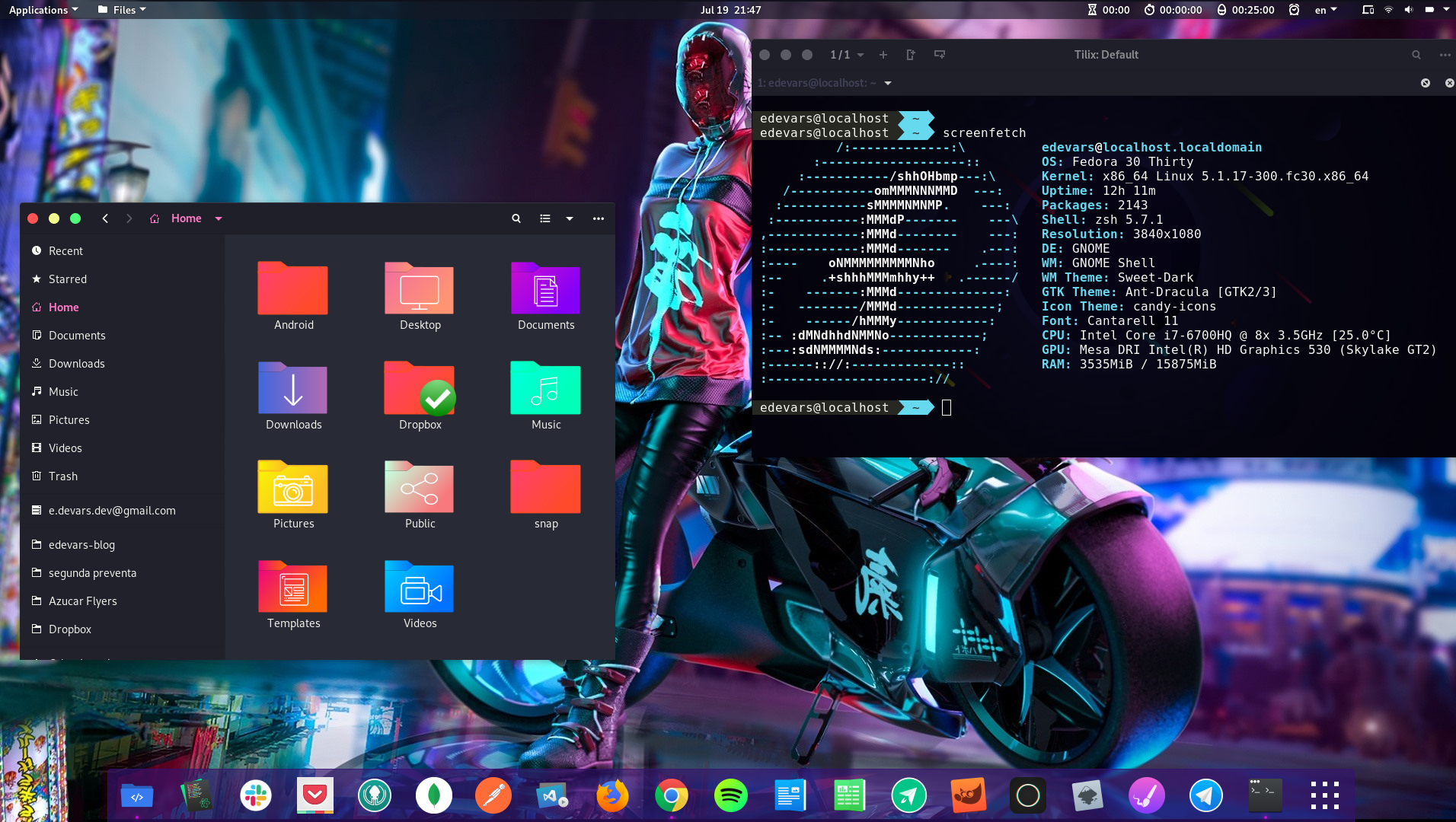
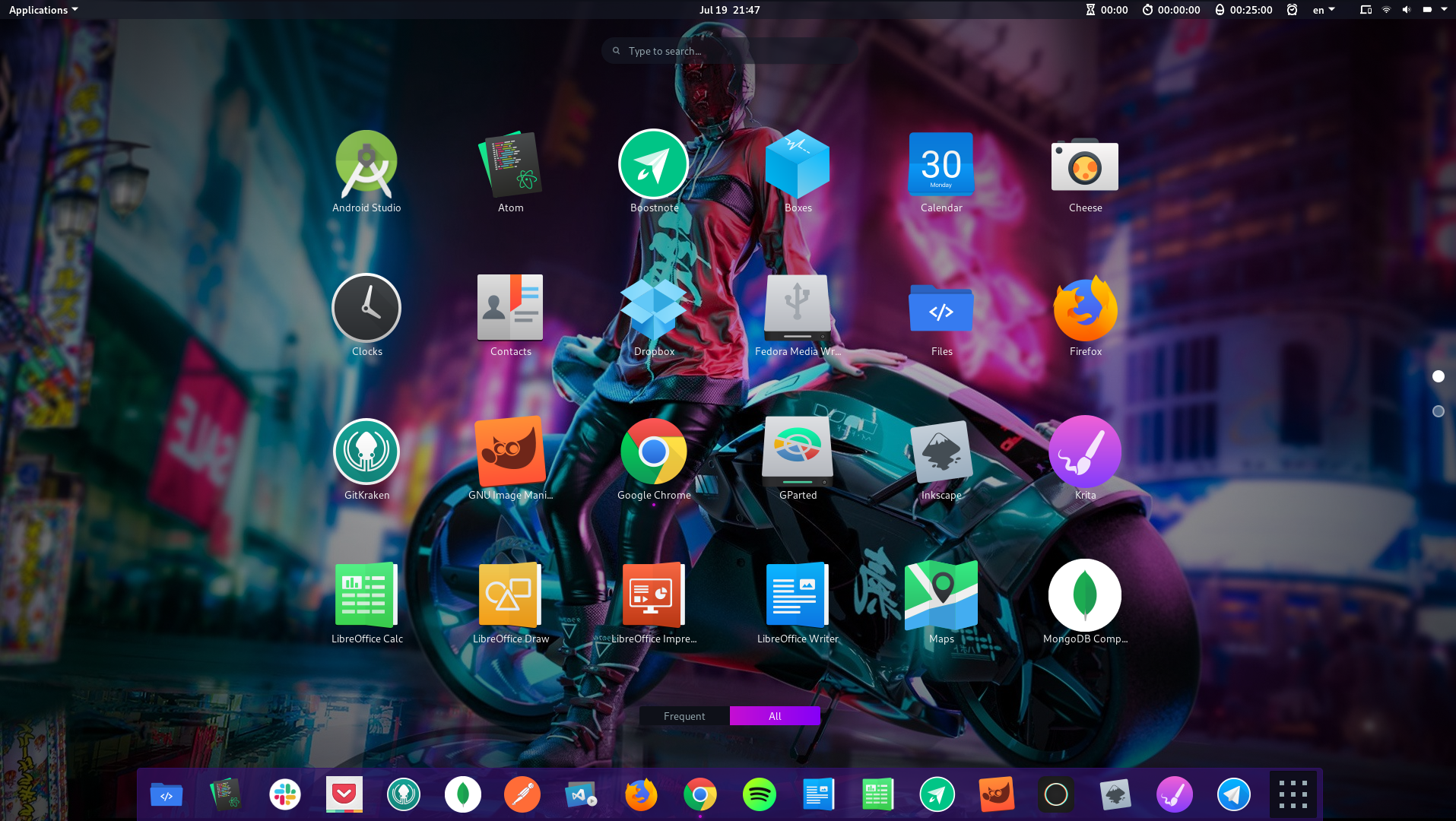
Linux, on the other hand, lets you modify every aspect. Don't like how it looks? You can change it yourself until it suits you. And this isn't only about aesthetics—you can also change important system aspects like which programs run on a schedule or user management. It's like going to the market, buying everything you like and always having it with you.
For example, this is what my computer's desktop looks like. The operating system I use is Fedora 30.
Comfort when developing
On most Linux systems, compilers and tools to start programming already come configured. And if they don't, they're very easy to install—with a couple of terminal commands you'll have Node JS, Python, etc. set up. Forget those compatibility errors that used to happen on Windows.
Plus integration with version control like Git is very easy to set up. I'd never felt so comfortable programming on an operating system as I do on Linux.
Unmatched speed and performance
If you have an old machine that's no longer fast with the latest Windows versions, don't hesitate for a second to give it a new life with Linux.
I remember when I was in high school I didn't have the best computer in the world—it was an eMachines laptop (that brand doesn't even exist anymore). It only had 2 GB of RAM and an Intel Celeron processor, but I decided to use Ubuntu on that machine and to this day it still runs great. Can you imagine how fast your machine would be if you used Linux?
Great variety to choose from
All Linux systems use something called a kernel, which we can think of as the heart of the operating system. They all use the same kernel to function, but each one decides what extra software packages to add to the distribution. There are distributions focused on general use like Ubuntu or Fedora, others focused on privacy like Tails, and even distributions focused on cybersecurity like Kali Linux.
If you want to see it in a simpler way, imagine the Linux kernel is like the patty of a burger, and the distributions are the finished burger with all the ingredients you like best.
So I invite you to be brave and try one of the many distributions that exist. If you're already set on using Linux, here are some ideal distributions to get started: